


Hearing Noises in Your Attic? What They Could Mean | Citrus County Wildlife Removal
- Sep 16, 2020
- 4 min read
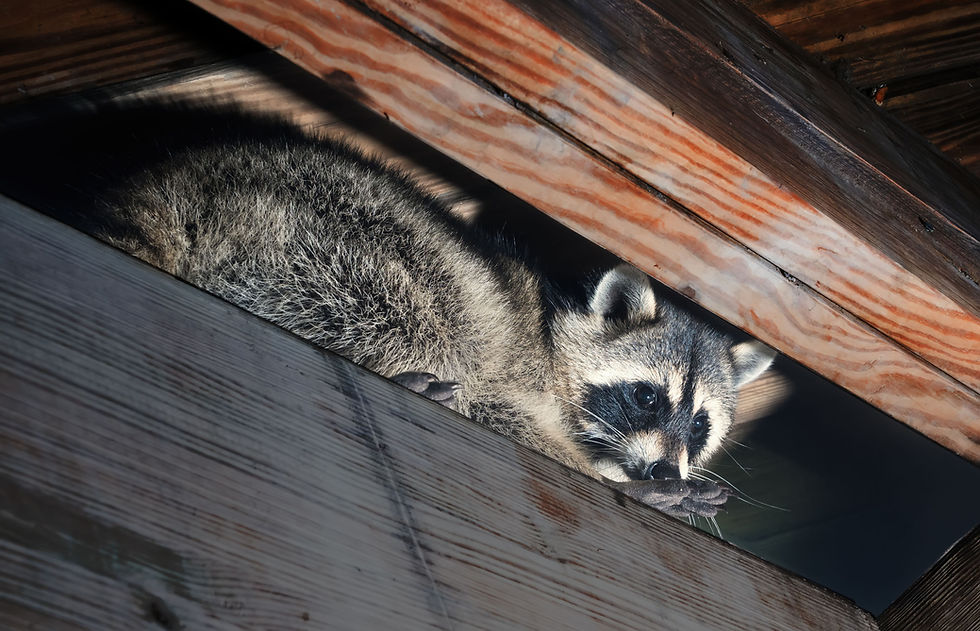
If you've been lying in bed and suddenly hear scratching, thumping, or something running across your ceiling, you're not alone.
One of the most common calls we receive begins with:
"I think something is in my attic."
In many cases, that suspicion is correct.
Throughout Crystal River, Homosassa, Inverness, Lecanto, Beverly Hills, Hernando, Floral City, and the surrounding Citrus County communities, wildlife frequently finds its way into attics while searching for shelter, warmth, or a safe place to raise young.
The type of noise, when it happens, and where you hear it can often provide important clues about what animal you're dealing with.
What Kind of Noise Are You Hearing?
Different animals tend to make different sounds.
Here are some of the most common descriptions homeowners give us.
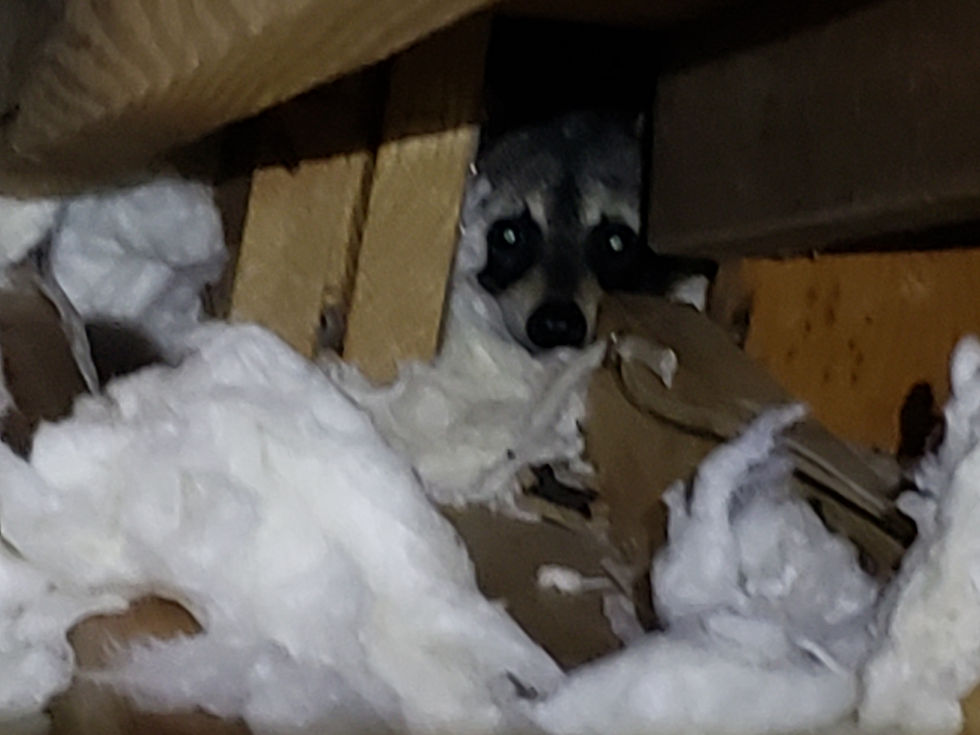
(Seen below: Female raccoon with babies stares back at us from her safe space in the soffit of a home in Citrus County, Florida)
Scratching Sounds
Light scratching usually points toward:
Rats
Mice
Squirrels
Scratching often occurs as animals move through insulation or climb along framing.
Heavy Thumping
Louder footsteps or thuds often indicate a larger animal such as:
Raccoons
Opossums
Because of their size, raccoons often sound surprisingly similar to a person walking across the attic.
Chewing Noises
If you hear repeated chewing or gnawing, rodents are one of the first possibilities.
Rats and mice constantly gnaw to keep their teeth from becoming overgrown, and unfortunately that can include wood, plastic, insulation, and even electrical wiring.
Scurrying
Fast, darting movement usually suggests:
Squirrels
Rats
Mice
The speed and timing can help narrow it down.
Does the Time of Day Matter?
Absolutely.
The time you hear activity is often one of the biggest clues.
Mostly During the Day
Often points toward:
Squirrels
Squirrels are active during daylight hours, especially around sunrise and late afternoon.
Mostly At Night
More commonly associated with:
Rats
Mice
Raccoons
Opossums
These animals are primarily nocturnal and become active after dark.
Other Signs Wildlife Is in Your Attic
The sounds aren't the only clue.
You may also notice:
Droppings
Strong odors
Damaged insulation
Chewed wiring
Nesting material
Stains on ceilings
Unusual pet behavior
The more signs you notice, the more likely you're dealing with an active wildlife issue.
Could It Be Something Other Than Wildlife?
Sometimes.
Not every attic noise is caused by an animal.
Other possibilities include:
Tree branches rubbing against the roof
Loose roof vents
Expanding and contracting framing
Birds walking on the roof
Heavy rain or wind
I've even had customers convinced they had a raccoon in the attic when it turned out to be crows hopping across a metal roof.
That's why a proper inspection matters before jumping to conclusions.
Why You Shouldn't Ignore Attic Noises
Wildlife rarely leaves on its own because it enjoys paying rent elsewhere.
If an animal has found food, shelter, or a safe nesting location, it may remain for weeks or even months.
During that time it can:
Damage insulation
Chew electrical wiring
Contaminate the attic with urine and droppings
Create foul odors
Raise young inside the structure
The longer the issue continues, the more extensive the cleanup and repairs can become.

What I See Most Often
One thing I've learned over the years is that homeowners almost always underestimate how long the animal has been there.
They'll tell me,
"We just started hearing something last night."
Then we get into the attic and find nesting material, droppings, and multiple travel paths that have clearly been there for weeks and even months.
The noise didn't start yesterday.
Yesterday was simply the first time it became loud enough or in the right spot to notice.
That's why I always recommend investigating attic noises sooner rather than later.
Our Inspection Process
When we inspect an attic, we're not just looking for the animal.
We're looking for:
Entry points
Tracks
Droppings
Nesting areas
Damage
Species identification
Evidence of babies
Areas that need exclusion repairs
Finding how the animal got inside is just as important as removing it.
Frequently Asked Questions
How can I tell if it's a squirrel or a raccoon?
A good rule of thumb is the time of day.
Daytime activity often points toward squirrels, while heavy nighttime activity is more commonly associated with raccoons or rats.
Will the animal eventually leave?
Sometimes.
But if it's using your attic for shelter or raising young, waiting may simply allow more damage to occur.
Are attic noises always wildlife?
No.
Weather, roof components, and even birds on the roof can create similar sounds.
An inspection helps determine the actual cause.
Can rodents damage electrical wiring?
Yes.
Rodents frequently chew electrical wiring, which can lead to expensive repairs and may create fire hazards if left unchecked.

Should I investigate the attic myself?
If you suspect wildlife, it's usually safer to avoid entering the attic until you know what you're dealing with. Animals protecting young or cornered in tight spaces can become defensive.
Hearing Noises in Your Attic?
If scratching, thumping, or chewing sounds are keeping you awake, don't ignore them.
Nature-Tech Wildlife Solutions provides professional wildlife inspections, attic animal removal, rodent control, raccoon removal, squirrel removal, and exclusion services throughout Crystal River, Homosassa, Inverness, Lecanto, Beverly Hills, Hernando, Floral City, and the surrounding Citrus County area.
We'll identify what's making the noise, remove the animal safely, and help keep it from coming back.
Hearing noises? Call us today for your FREE inspection! 352.783.5994


Comments