


Squirrel Removal in Citrus County, FL | Attic Squirrel Removal
- Aug 17, 2020
- 8 min read
Updated: Aug 2
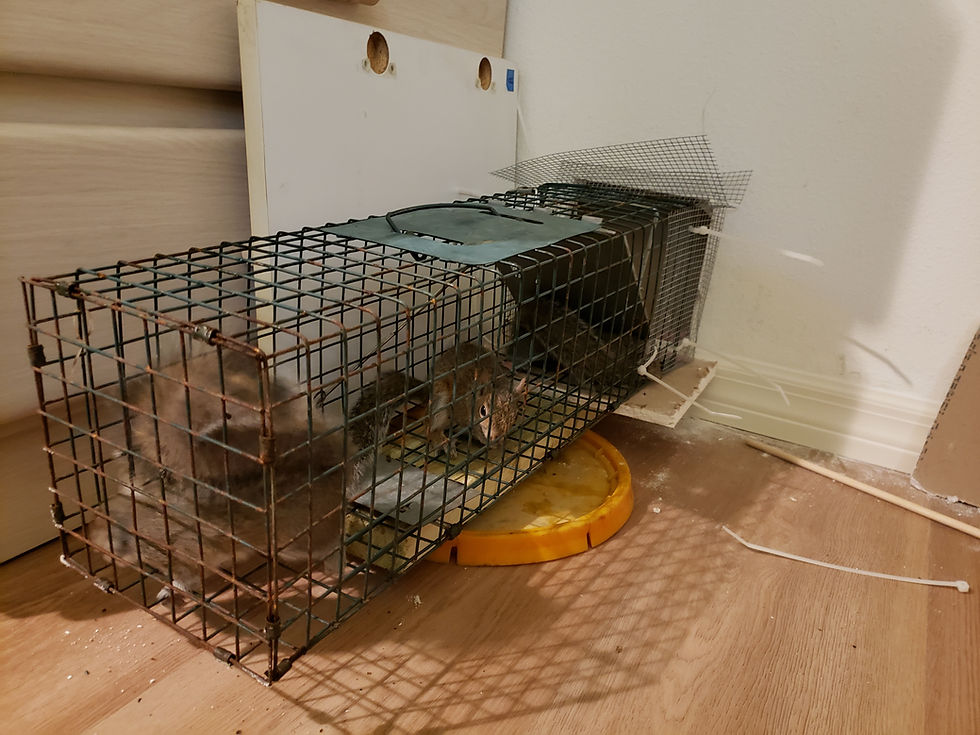
Squirrels are a familiar part of life on Florida's Nature Coast.
Watching one race across an oak branch or attempt an elaborate heist on a bird feeder can be entertaining.
Listening to one race across your attic at 6:30 in the morning is considerably less charming.
When squirrels enter homes, they can damage soffits, fascia, vents, insulation, and even electrical wiring. Worse, simply removing the squirrel doesn't necessarily solve the problem. If the opening remains accessible, another squirrel may eventually move into the same space.
Nature-Tech Wildlife Solutions provides professional squirrel removal, attic inspections, wildlife exclusion, and structural entry-point repairs throughout Crystal River, Homosassa, Inverness, Lecanto, Beverly Hills, Hernando, Floral City, Citrus Springs, and surrounding communities throughout Citrus County and Florida's Nature Coast.
Our goal isn't simply to get the squirrel out.
It's to figure out how it got in and help keep the next one out.
How Do I Know If Squirrels Are in My Attic?
One of the best clues is when you hear the activity.
Eastern gray squirrels are primarily active during daylight hours. If you're hearing running, scratching, chewing, or movement in the attic shortly after sunrise or during the daytime, squirrels should be high on the list of suspects.
Flying squirrels, however, are nocturnal, so nighttime activity doesn't automatically rule squirrels out.
Common signs of squirrel activity include:
Scratching or running sounds in the attic
Activity shortly after sunrise
Chewing or gnawing sounds
Damaged soffits or fascia
Enlarged openings around rooflines
Nesting material in the attic
Droppings
Damaged insulation
Chewed wiring
Squirrels repeatedly entering the same area of the roof
If you're unsure what you're hearing, the timing, location, and type of noise can help us determine whether you're dealing with squirrels, rats, raccoons, or another attic visitor.
How Do Squirrels Get Into Homes?
Squirrels are exceptional climbers.
Trees, fences, utility lines, roofs, gutters, and neighboring structures can essentially become highways leading directly to your roof.
Once there, squirrels look for weak points such as:
Damaged soffits
Rotten fascia
Roof returns
Gable vents
Loose screening
Roof intersections
Gaps beneath roofing materials
Construction openings
Existing wildlife damage
And here's what makes squirrels particularly troublesome:
They have teeth and aren't afraid to use them.
A small existing gap may be all a squirrel needs to begin chewing its way into a larger opening.
That's why squirrel removal frequently becomes both a wildlife problem and a construction problem.
Why Do Squirrels Want to Live in My Attic?
From the squirrel's perspective, your attic can be pretty luxurious.
It's elevated.
Protected from weather.
Relatively safe from predators.
Warm.
And often surrounded by mature trees providing convenient access.
For a female looking for somewhere protected to raise young, an attic can resemble an enormous artificial tree cavity.
The squirrel doesn't understand that your insulation isn't nesting material and your electrical system isn't a chew toy.
It's simply taking advantage of available shelter.
Can Squirrels Damage My Home?
Absolutely.
Once inside, squirrels may:
Tear or compress insulation
Chew wood
Damage soffits and fascia
Gnaw electrical wiring
Contaminate attic areas with urine and droppings
Build nests
Create or enlarge exterior openings
Chewing is particularly important.
Rodents have continuously growing incisors, which means gnawing is a normal part of their biology. Unfortunately, once they're inside a structure, the available chewing material includes components of your house.
Electrical wiring is one of the reasons squirrel activity inside an attic shouldn't simply be ignored.
What About Baby Squirrels?
This is extremely important.
If a squirrel has established a nest inside an attic, there may be dependent young present.
Simply trapping or excluding an adult without checking for babies can create a much larger problem.
Young squirrels left behind may die inside the structure, resulting in odor and insects. A mother separated from her young may also become extremely persistent about trying to regain access.
Before permanently sealing an active squirrel entry point, it's important to determine whether dependent young may still be inside.
This is one reason professional wildlife removal isn't simply:
Find hole → plug hole → go home.
Wildlife biology matters.
Should I Just Seal the Hole?
Not until you know what's inside.
If you seal an active entry point while squirrels remain in the attic, you've traded a squirrel problem for a trapped squirrel problem.
That's worse.
The animal may:
Chew aggressively trying to escape
Create another opening
Enter interior portions of the home
Become trapped and die
And if babies are present, sealing out the mother can leave them stranded inside.
The proper sequence matters:
Identify → Remove/Exclude → Verify → Repair.
Squirrel Removal Is Only Half the Job
This is where Nature-Tech's construction background becomes especially valuable.
Getting a squirrel out of an attic doesn't repair the hole it used to enter.
If we remove a squirrel from a damaged soffit and leave the soffit damaged, we've basically completed the wildlife equivalent of changing tenants without fixing the broken front door.
Another animal can move right back in.
Professional squirrel exclusion focuses on identifying and repairing vulnerable areas so future squirrels have fewer opportunities to enter.
Squirrel Exclusion & Structural Repairs
Depending on the home and entry point, exclusion work may involve:
Soffit repair
Fascia repair
Vent screening
Roof-return reinforcement
Closing construction gaps
Installing durable barriers
Repairing previous wildlife damage
And this is something we strongly believe in:
Wildlife exclusion shouldn't make your house look like it was repaired by a raccoon with a Home Depot gift card.
Whenever practical, our goal is to provide repairs that are not only functional but also blend appropriately with the existing structure.
Your home should be protected from wildlife without looking patched together afterward.
What About Spray Foam?
Spray foam has legitimate uses in construction.
But simply filling a squirrel entry point with foam is generally not a durable squirrel exclusion strategy.
Squirrels can chew.
A determined squirrel returning to an established nesting site may make short work of materials that weren't designed to resist wildlife.
Effective exclusion requires choosing materials and repair methods appropriate for:
The animal
The opening
The building material
The location
The forces acting on the repair
That's where construction knowledge becomes just as important as wildlife knowledge.
Do Trees Need to Be Trimmed Away From the House?
Sometimes it helps.
Tree limbs that directly contact or overhang a roof can provide convenient access for squirrels and other wildlife.
But trimming every tree near your home isn't a magic squirrel shield.
Squirrels are excellent jumpers and climbers, and Florida neighborhoods often provide plenty of alternative routes.
The more important objective is making sure that when a squirrel reaches your roof...
there isn't an easy way inside.
Should Every Squirrel on My Property Be Removed?
No.
And this is an important part of our philosophy at Nature-Tech.
A squirrel living in an oak tree isn't a nuisance simply because it's a squirrel.
Florida wildlife officials similarly distinguish between wildlife simply being present and an individual animal actually causing property damage, creating a safety issue, or causing a conflict around a building.
Squirrels are part of Florida's ecosystem.
Our job isn't to eliminate squirrels from your property.
Our job is to prevent them from living inside your house.
Not Every Florida Squirrel Is the Same
Most homeowners simply see "a squirrel," but Florida is home to multiple squirrel species.
That's important because they don't all have the same behavior or legal status.
Eastern Gray Squirrel
The familiar gray squirrel is the species most homeowners recognize. They're active primarily during the day and are excellent climbers.
Southern Flying Squirrel
Flying squirrels are much smaller and primarily nocturnal. They don't truly fly, but glide between trees using a membrane of skin between their limbs.
Because they're active at night, flying squirrels can sometimes be mistaken for rats when they're living inside structures.
Fox Squirrel
Florida's fox squirrels are considerably larger and can vary dramatically in coloration.
They're also an important example of why proper species identification matters before wildlife is removed.
FWC currently states that fox squirrels may not be taken or pursued, and certain Florida fox squirrel populations have additional conservation significance.
If we're unsure what species we're dealing with, we identify it before deciding what should happen next.
That's responsible wildlife management.
Our Squirrel Removal Process
1. Inspect the Home
We inspect the attic, roofline, soffits, fascia, vents, and other potential entry areas to determine where squirrels are entering.
2. Identify the Species and Activity
We look for tracks, droppings, nesting material, damage, entry patterns, and other evidence to determine what's actually living inside.
3. Check for Young
When appropriate, we determine whether dependent young may be present before beginning exclusion or permanently sealing openings.
4. Remove or Exclude the Squirrels
The appropriate technique depends on the structure, species, season, and circumstances.
5. Repair Entry Points
Once we're confident the animals are out, vulnerable openings can be professionally secured.
6. Recommend Prevention
We'll point out structural vulnerabilities, tree access, food sources, or other conditions that may contribute to future squirrel activity.
What I See Most Often
One of the biggest mistakes homeowners make with squirrels is focusing entirely on the animal they can see.
They'll say:
"I need you to get this squirrel out of my attic."
And they're right.
But I'm equally interested in the hole behind the squirrel.
Because if we remove that animal today and leave its entrance available, we've only solved half the problem.
That's the difference between squirrel removal and squirrel control.
At Nature-Tech Wildlife Solutions, we're interested in solving the whole problem.
Frequently Asked Questions About Squirrel Removal
Why do I hear squirrels early in the morning?
Eastern gray squirrels are active during daylight hours, so activity around sunrise is common. Flying squirrels, however, are nocturnal, which is why the timing of attic noises can help identify the species involved.
Can squirrels chew electrical wires?
Yes. Squirrels are rodents and regularly gnaw materials. Wiring inside an attic can be damaged by squirrel activity, creating another reason to address an infestation rather than simply tolerate it.
Will squirrels leave my attic on their own?
They may leave the attic temporarily to forage, but an established nesting or shelter site may continue being used. If young are present, the female has an even stronger reason to return.
Can I just block their entrance while they're gone?
That's risky.
You need to be confident no squirrels or dependent young remain inside before permanently closing an active entry point.
Do squirrel repellents work?
Repellents and ultrasonic devices aren't substitutes for physical exclusion. If squirrels can still access a suitable attic through an open structural gap, fixing that access point is generally the more dependable long-term strategy. Recent extension-expert guidance likewise emphasizes physical barriers and sealing entry points over commercial repellents or sonic devices.
Why do squirrels keep coming back?
A protected attic can be valuable shelter, and an existing entry point makes accessing it easy.
Removing the squirrel without repairing the structure leaves the opportunity available to another animal.
Do you remove squirrels from yards?
A squirrel simply living outside generally doesn't require wildlife removal.
We focus on animals that are creating actual conflicts with homes, buildings, people, or property.
Need Squirrel Removal in Citrus County?
If you're hearing scratching, running, or chewing inside your attic, or you've spotted squirrels entering your roofline, Nature-Tech Wildlife Solutions can help.
We provide professional squirrel removal, attic inspections, wildlife exclusion, and structural entry-point repairs throughout Crystal River, Homosassa, Inverness, Lecanto, Beverly Hills, Hernando, Floral City, Citrus Springs, and surrounding Citrus County and Nature Coast communities.
We'll determine what's living inside, identify how it got there, and develop a plan to solve the current problem while helping prevent the next one.
Protecting Homes. Respecting Wildlife. Building Lasting Solutions.
Call today for your FREE inspection: 352.783.5594


Dealing with wildlife can be a hassle, especially in urban areas. For anyone facing issues with squirrels, I found this helpful resource for squirrel removal Mississauga—they offer professional and humane solutions!